The Sub-Surface Mechanics of Municipal Sewer Failures in Grand Rapids, Michigan
Sub-grade residential architectural frameworks located throughout Western Michigan exist under continuous mechanical and environmental duress due to specific structural constraints governing regional municipal wastewater infrastructure. Within the city boundaries of Grand Rapids and adjacent suburban territories across Kent County, a substantial portion of the underground collection grid relies on combined legacy pipelines constructed over fifty years ago. These outdated municipal networks utilize interconnected channels to transmit both standard domestic wastewater and heavy environmental surface storm runoff inside single trunk lines. When sudden convective storm arrays track across Lake Michigan or intense seasonal thaws manifest rapidly, the volumetric flow velocity entering these shared lines regularly spikes beyond the structural carrying parameters of the grid. Consequently, the public sewer mains transition rapidly from standard gravity-driven lines into heavily pressurized hydraulic conduits, generating massive reverse hydrostatic pressure vectors that search for physical release points inside residential structures.
Private basement floor drains, below-grade utility cleanouts, and mechanical collection pits function as the primary structural vulnerability paths during municipal line overloads. If a property completely lacks proactive backflow mitigation assemblies—such as an automatic sewer backwater valve, mechanical check-valves, or overhead sewer configurations—the rising column of municipal fluid is injected directly into household lines with massive force. This fluid is technically designated under the Institute of Inspection Cleaning and Restoration Certification S500 guidelines as Category 3 water, universally classified as toxic black water. Category 3 wastewater is a dangerous, solid-laden bio-hazardous slurry filled with unrefined organic human waste, destructive soil pathogens, chemical pollutants, agricultural run-offs, and corrosive industrial chemical deposits. Black water represents the most financially damaging and high-risk lead vector within pay-per-click consumer routing grids due to the immediate hazardous material containment and advanced structural sanitization processes required to recover the property safely.
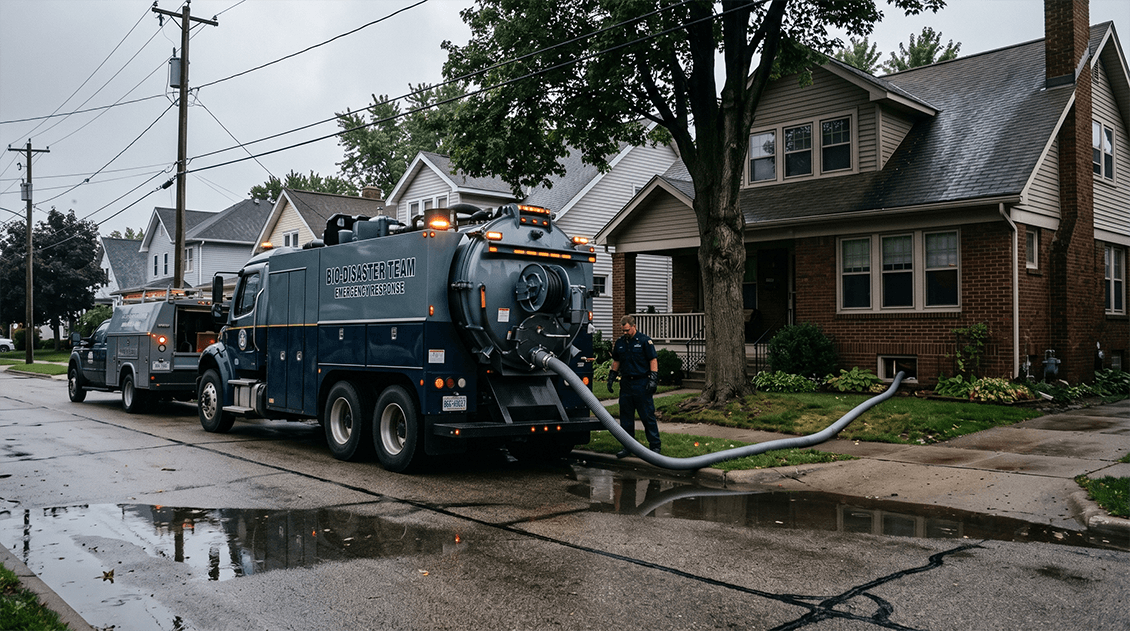
Heavy-duty technical fleet deployment executing emergency extraction protocols on saturated basement concrete foundations in Grand Rapids, MI.
Psychrometric Colonization and Deep Capillary Damage of Category 3 Wastewater
When an active municipal sewer line backs up into a finished or unfinished basement space, the physical interaction between the toxic liquid and the building materials triggers immediate structural degradation. Concrete masonry foundation walls and floor slabs are inherently porous structures characterized by a dense network of microscopic capillaries. Saturated concrete acts as a giant structural sponge, pulling raw black water deep into its internal matrix via active capillary suction. Topical cleaning, simple mopping, or standard homeowner detergents are completely inadequate for this condition, as they fail to reach the trapped biological contaminants, industrial chemical deposits, and pathogenic bacteria colonization operating deep within the subsurface masonry layers.
Simultaneously, the presence of large volumes of toxic moisture causes a dramatic shift in the relative humidity of the indoor environment, turning the basement into an unstable thermodynamic system. Ambient relative humidity values crossing sixty percent initiate aggressive mold spore activation on all surrounding organic surfaces. Structural wood framing components, wood sill plates, gypsum drywall paper backing, and structural insulation elements absorb this airborne vapor rapidly. When the internal moisture content of framing timber rises past nineteen percent, wood-destroying fungal colonies initiate cellular breakdown, causing fast framing rot and permanent damage to floor supports. If structural drying, mechanical extraction, and comprehensive chemical neutralization are delayed past twenty-four hours, the environmental risk shifts dramatically from a localized incident into a complete real estate structural loss event, requiring massive asset replacement expenses.
Advanced Hydro-Vacuum Extraction and Closed-Loop Thermodynamic Evaporation Protocols
Mitigating a hazardous Category 3 sewage breach across Kent County requires specialized equipment and strict compliance with state plumbing codes. The independent restoration professionals accessible via our automated routing network execute a systematic, multi-stage remediation protocol designed to restore absolute structural safety to the property. The initial operational phase centers on high-volume mechanical evacuation. Dispatched crews deploy truck-mounted positive-displacement air vacuum trucks to rapidly pull standing wastewater and thick organic mud out of the basement, transferring the hazardous material directly into sealed steel transport containers on the vehicles to prevent cross-contamination.
Following the complete removal of the standing liquid volume, technicians perform deep pressure injection flushing using specialized bio-wash solutions and broad-spectrum EPA-registered anti-microbial compounds. These professional chemical solutions are engineered to break down tough organic proteins, dissolve biofilm deposits on concrete surfaces, and neutralize hazardous bacterial colonies like Escherichia coli and Salmonella enterica at a molecular level. Once disinfection is verified, the technical focus shifts to establishing deep thermodynamic moisture extraction. Technicians set up high-velocity axial air movers paired with industrial Low-Grain Refrigerant (LGR) dehumidifiers to lower the vapor pressure of the ambient air. This targeted approach draws trapped water molecules out of deep concrete pores and wooden framing studs, ensuring the home safely returns to dry industry standards and protecting long-term real estate values across central Michigan.
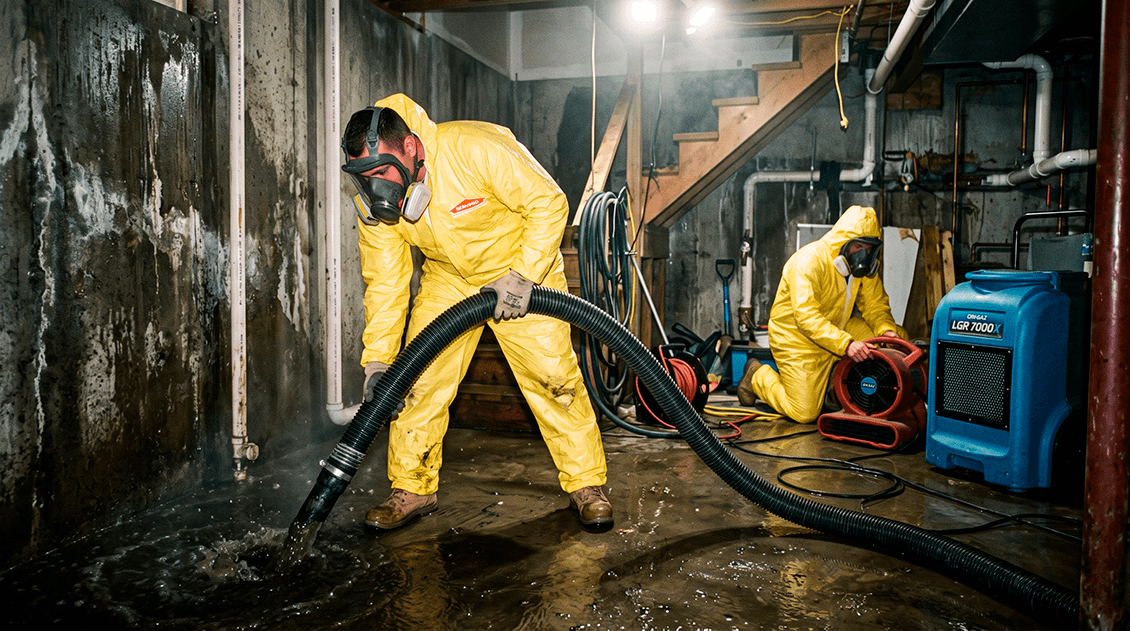
Specialized LGR dehumidification systems and high-velocity thermodynamic extraction grids restoring dry-standards to concrete foundations.
Comprehensive Insurance Documentation Folders and Structural Asset Verification
Navigating a massive property loss settlement with national insurance providers after a major municipal sewer incident requires absolute transparency and verifiable technical records. Corporate insurance adjusters thoroughly audit local water incidents, often denying claims or limiting payouts if there are gaps in structural drying history or unverified equipment run logs. The independent restoration professionals in our central database eliminate these risks by preparing exhaustive, court-ready digital documentation packages. These complete files track initial thermal infrared scans, daily atmospheric moisture metric charts, and official final structural dry-standard verifications. Having this detailed record package streamlines the claims process, helping you secure full compensation from your insurance provider without unnecessary processing delays.