The Pathogenic Risks of Category 3 Wastewater Contamination
In environmental mitigation frameworks, sewage backups are never classified as simple water damage. Under the strict guidelines set by the Institute of Inspection Cleaning and Restoration Certification (IICRC) S500 standard, municipal wastewater breaches are designated as Category 3 incidents, universally referred to as "black water." This highly toxic fluid represents a critical biological hazard that contains a dense, unpredictable matrix of human solid waste, active parasitic organisms, destructive fungal spores, heavy chemical run-offs, and lethal bacterial strains such as Escherichia coli, Salmonella enterica, and Hepatitis A viruses. When a municipal main surcharges across the Grand Rapids grid, this hazardous slurry is driven into subterranean residential basements under immense hydrostatic pressure, demanding instant containment protocols.
The behavioral dynamics of Category 3 water dictate that immediate, mechanical extraction must happen within the first few hours of exposure. Unlike clean environmental water, black water initiates near-instantaneous psychrometric contamination of everything it touches. The cellular structures of drywall, structural timber, subfloor assemblies, and concrete masonry foundations absorb the toxic liquid via porous capillary suction. If this material is left unmitigated, the bacterial colonies and viral vectors multiply exponentially every twenty minutes, turning an isolated property loss event into a severe public health hazard that poses acute neurological and respiratory threats to all occupants within the residential perimeter.
Industrial Vacuum Displacement and Volume Mitigation Criteria
Extracting a heavy, solid-laden sewage slurry requires specialized mechanical force that far exceeds the limits of standard light-duty water pumps or commercial shop vacuums. Light mechanical gear quickly fails due to solid mechanical blockages and thermal motor seizure when processing thick organic mud and municipal waste particles. Professional mitigation fleets deployed through our automated routing network utilize vehicle-mounted positive-displacement vacuum machinery. These high-capacity vacuum trucks utilize massive air-displacement blowers to generate a powerful, continuous vacuum field capable of pulling heavy wastewater up multiple vertical levels from deep basement structures without internal pump clogging.
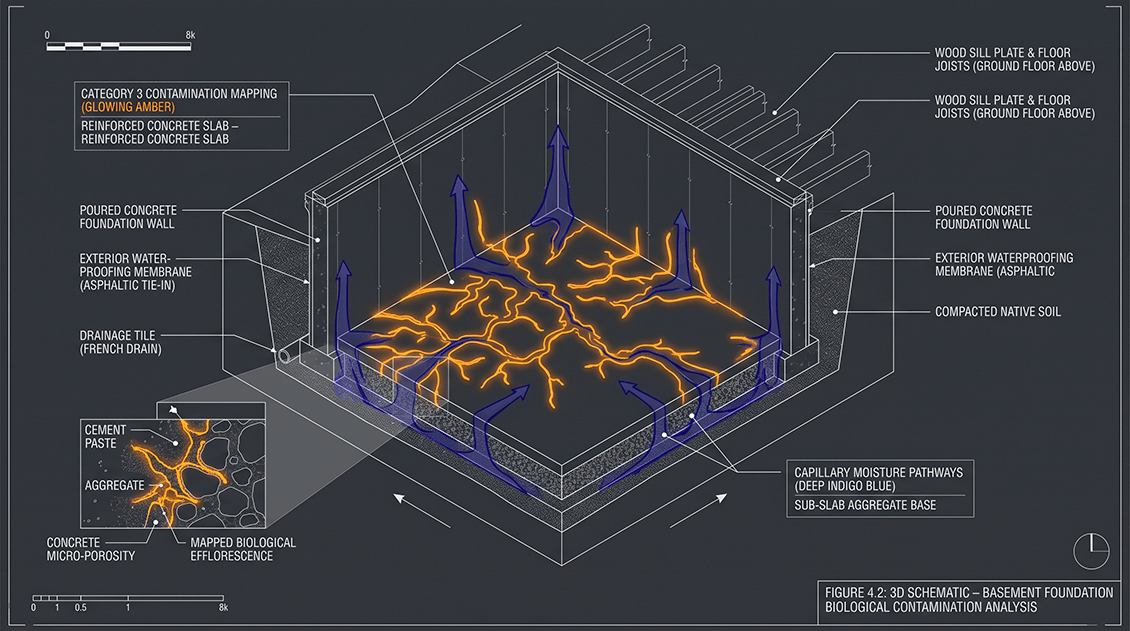
Cross-sectional engineering matrix demonstrating depth of biohazard capillary penetration into porous sub-slab concrete matrices.
Advanced Technical Protocols for Structural Desaturation
Once high-volume extraction crews isolate and pull the bulk liquids from the foundation slab, the technical focus transitions to removing the remaining micro-layers of organic residue trapped within the building substrate. This phase relies on high-pressure injection flushing using specialized bio-wash compounds. These advanced chemical counter-agents are specifically engineered to slice through tough lipid structures, dissolve protective bacterial biofilms, and completely neutralize dangerous pathogens on a molecular level. Technicians wear comprehensive Personal Protective Equipment (PPE), including Type 3 chemical-resistant hazmat garments and full-face respirator masks, ensuring safety while handling highly reactive antimicrobials.
Following comprehensive chemical neutralization, the remaining deep structural moisture is aggressively drawn out using professional thermodynamics. Technicians deploy low-grain refrigerant (LGR) dehumidification systems alongside high-velocity axial air movers. This targeted equipment array lowers the ambient vapor pressure of the indoor ecosystem, forcing water molecules trapped deep within concrete capillaries and wooden wall studs to evaporate into the air stream where they are collected and safely drained away. This deep drying process is monitored using non-penetrating thermal moisture meters to ensure the building accurately returns to documented dry-standards required by Michigan construction bylaws.
Comprehensive Insurance Documentation Folders and Structural Asset Verification
Navigating a massive property loss settlement with national insurance providers after a major municipal sewer incident requires absolute transparency and verifiable technical records. Corporate insurance adjusters thoroughly audit local water incidents, often denying claims or limiting payouts if there are gaps in structural drying history or unverified equipment run logs. The independent restoration professionals in our central database eliminate these risks by preparing exhaustive, court-ready digital documentation packages. These complete files track initial thermal infrared scans, daily atmospheric moisture metric charts, and official final structural dry-standard verifications. Having this detailed record package streamlines the claims process, helping you secure full compensation from your insurance provider without unnecessary processing delays.
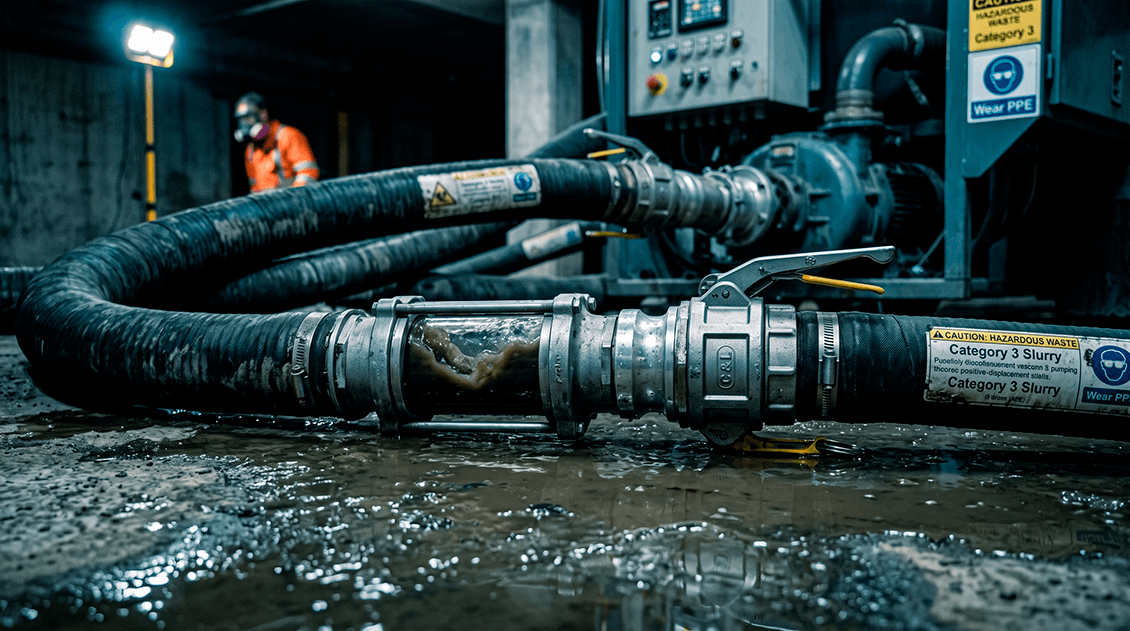
High-capacity positive-displacement vacuum extraction machinery executing volumetric evacuation of heavy Category 3 sewage slurry.
Compliance with State Environmental Safety Mandates
The processing, transportation, and final legal disposal of extracted Category 3 sewage slurry are heavily regulated by Michigan state environmental protection acts and local Kent County sanitation ordinances. Hazardous biological waste cannot simply be discharged into municipal storm drains or standard septic reservoirs. Our referral network partners operate in absolute compliance with these strict environmental laws. All pulled black water and toxic organic solids are safely held within sealed transport tanks on the extraction vehicles and driven directly to approved industrial water treatment facilities for legal, certified disposal. This precise chain of custody protects you from major environmental liability while ensuring your community's ecosystem remains completely protected from toxic biological contamination.