The Operational Dynamics of Emergency Response Fleets in Kent County
Managing structural water disasters and municipal mainline surcharges throughout the Grand Rapids metro area requires a strict, data-driven approach to heavy machinery logistics. When intense rain systems cause rapid infrastructure overload, the resulting property risk demands an immediate response. Minimizing the time between a subterranean sewage backup and mechanical fluid extraction requires a sophisticated mobile network. Emergency response vehicles—including high-capacity positive-displacement vacuum trucks, technical support units, and structural drying fleets—are strategically positioned across regional nodes to guarantee rapid deployment to impacted residential zones.
This strict logisitical positioning allows on-duty dispatchers to combat the immediate structural degradation caused by Category 3 black water. Because toxic municipal sewage carries significant organic waste and biological pathogens, containing the liquid within the first golden hour is vital to saving properties from catastrophic rot and foundational failure. The independent restoration operations accessible via our central database utilize advanced telecommunication tracking software to dynamically calculate response routes, bypassing traffic bottlenecks and urban delays to deliver high-volume extraction power directly to vulnerable structural basements across central Michigan.
Regional Coverage Zones and Geographic Parameters
Our designated network partners maintain constant equipment readiness across the complete Grand Rapids metropolitan boundary and surrounding Kent County lines. Field teams are strategically staged near major highway junctions to achieve our standard 40-minute response target during severe localized storms and municipal infrastructure overloads:
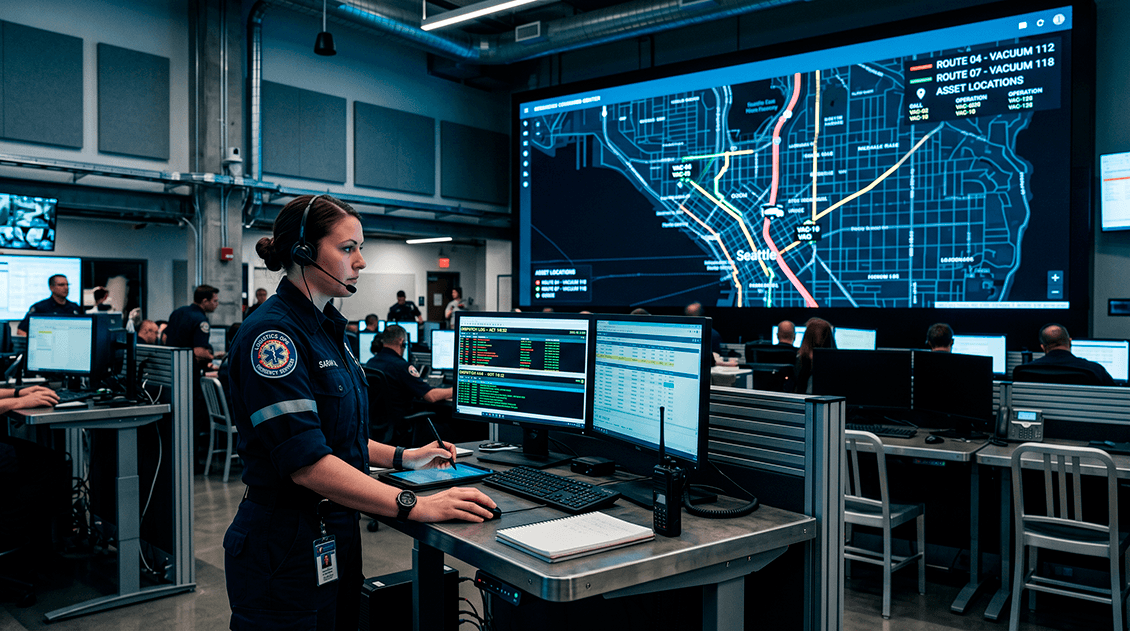
On-duty fleet logistics supervisor coordinating active emergency response truck deployment vectors across Kent County sectors.
Technical Operational Classification of Intake Priority
Upon receipt of an intake signal—either through our direct voice lines or emergency web transmissions—the dispatch system ranks the incoming file based on structural risk metrics. Incidents involving active municipal sewer reversals where black water is entering through subterranean floor drains receive immediate strategic precedence. This classification triggers the automatic reservation of high-volume positive-displacement vacuum machinery within our contractor database, preventing local equipment shortages from affecting high-priority property saves during widespread regional storm cycles.
Once priority parameters are established, the localized routing node monitors the transit coordinates of the assigned contractor vehicle. This level of logistic oversight guarantees that property owners are not left waiting without active support while toxic slurry damages their residential foundations. Property stewardship requires proactive mitigation, and our digital mapping interface provides the baseline communication efficiency necessary to safeguard real estate value under extreme environmental stress conditions.
Strategic Management of Structural Liability Records
Beyond the mechanical extraction of hazardous waste, our referral partners place absolute priority on the generation of clean, verifiable operational records. Insurance adjusters require complete documentation histories including atmospheric moisture levels, thermal infrared imagery, and strict equipment runtime tracking data before validating property loss policies. Dispatched field teams ensure total administrative security by compiling these metrics into comprehensive, court-ready asset folders, ensuring you have the necessary documentation to achieve fair insurance settlements without friction.
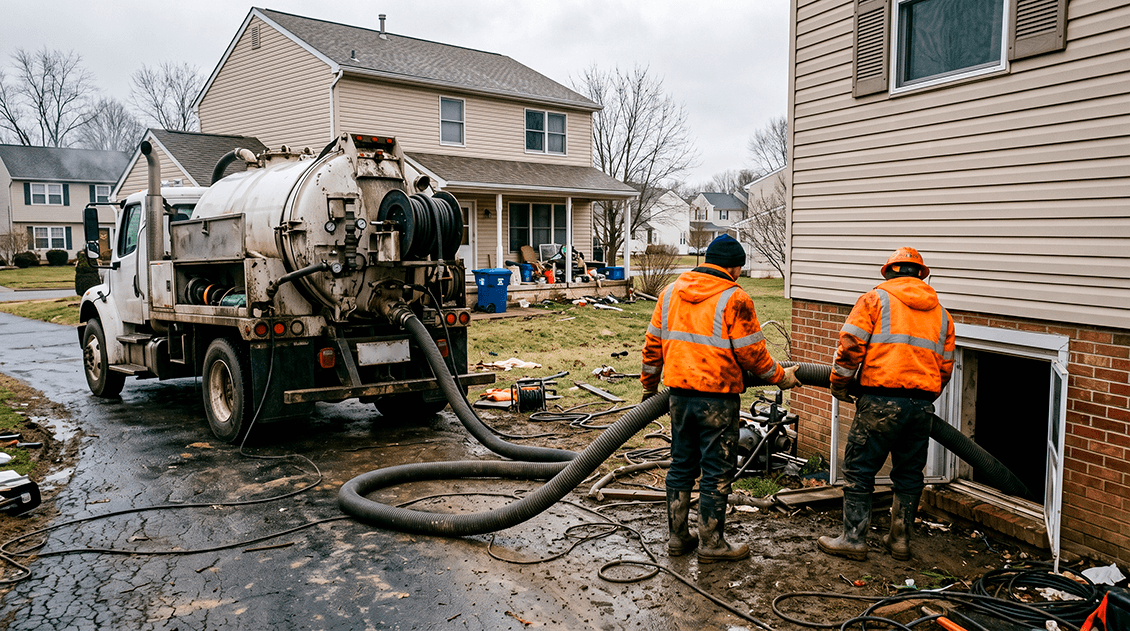
On-site emergency operations: Dispatched vacuum technicians executing immediate high-volume extraction of Category 3 waste from a structural basement node.
Total Adherence to State Environmental Health Mandates
Every professional organization operating within our automated network functions under an exhaustive environmental compliance charter. The extraction, transport, and legal treatment of toxic biological waste are governed under strict Michigan state laws. Our partners guarantee that all recovered black water and contaminated organic solids are handled through secure, sealed truck systems and transferred directly to state-approved hazardous processing facilities, eliminating the risk of municipal code violations or community ecosystem cross-contamination.