The Engineering Necessity of Backwater Valve Retrofitting
In the urban geography of Grand Rapids and the surrounding Kent County municipalities, residential and commercial plumbing systems remain perpetually vulnerable to municipal mainline overload. When combined storm-sanitary infrastructure reaches its volumetric limit during convective rain cycles, the resulting backpressure forces untreated black water into building foundations with massive hydraulic velocity. An automatic backwater valve (ABV) acts as the definitive mechanical solution to this systemic failure, providing a fail-safe, unidirectional flow gate that protects property integrity by mechanically isolating the building's lateral lines from the external surge pressure of the municipal system.
The core mechanism of an ABV utilizes an internal, gravity-balanced flapper assembly housed within a precision-molded corrosion-resistant chamber. During standard operating conditions, household grey and black water flow exits the building through the valve via gravity, keeping the flapper in an open, neutral position. However, upon the detection of reverse hydraulic flow—characteristic of municipal mainline surcharges—the valve’s integrated flapper swings shut with near-instantaneous mechanical precision. This hermetic seal isolates the interior plumbing grid from the external contaminated flow, preventing toxic slurry from entering the basement structure through floor drains or basement-level fixtures. This assembly is not a mere convenience; it is a critical structural defense against the ingress of hazardous substances that could otherwise render a property uninhabitable.
Technical Classification and Valve Selection Criteria
Selecting the correct backwater valve is a critical engineering decision that depends on lateral line diameter, flow velocity, and local plumbing code requirements. Industrial-grade ABVs are categorized by their structural rating and the specific material composition of the housing. Cast-iron valves are typically utilized in heavy-duty commercial applications, whereas ABS or PVC high-impact thermoplastic units are preferred for residential retrofitting due to their resistance to corrosive sewage environments. Professional installation must always account for a "full-port" design, ensuring that the installation does not artificially constrict the diameter of the outbound lateral line, which could otherwise lead to premature solids accumulation and mechanical blockages. Choosing the right valve involves calculating the pipe friction losses and ensuring the internal flapper assembly can fully clear the specific volumetric flow rate expected during daily household usage.
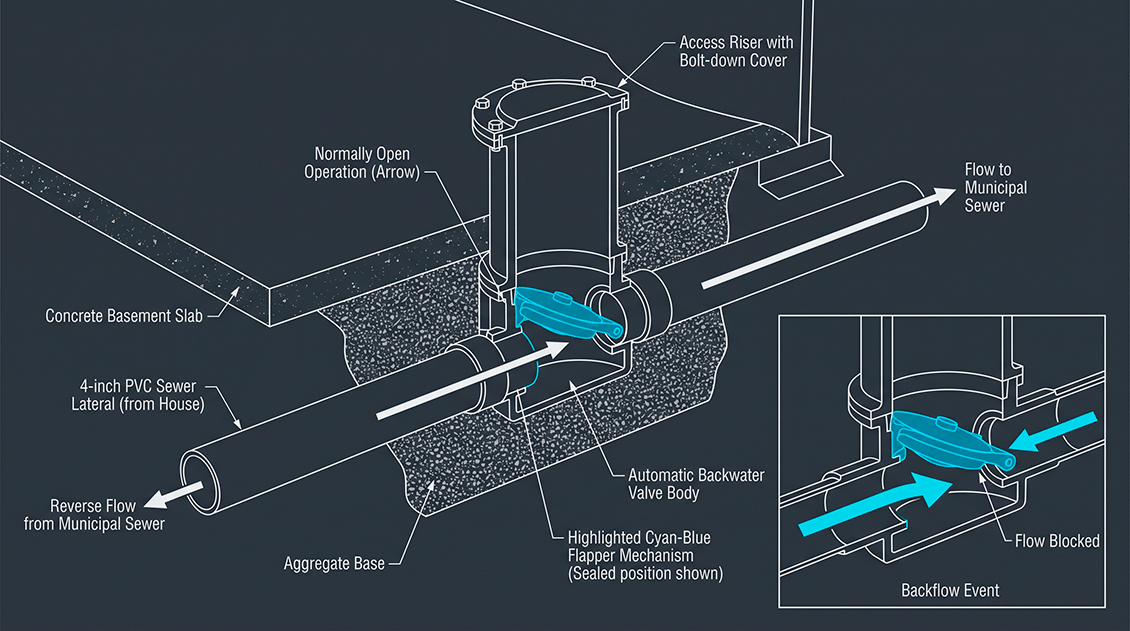
Mechanical engineering schematic demonstrating automatic backwater valve integration for total sewer backflow protection in Kent County residential properties.
Installation Protocols and Sub-Slab Integration
Retrofitting a backwater valve into an existing basement slab requires a systematic surgical procedure to ensure long-term functionality. Technicians first perform an endoscopic visual assessment to locate the exact trajectory of the outbound lateral line and identify potential interference with existing foundation supports. Once located, the concrete floor slab is excavated to expose the main pipe. Precision cutting follows, with careful attention paid to maintaining the natural 1/4 inch per foot gradient—essential for ensuring consistent effluent velocity. The ABV housing is then integrated using secure, shear-proof fernco or rigid-coupling connections, verified with pressurized leak tests before final masonry restoration to prevent structural instability in the concrete foundation surrounding the pipe.
Crucially, accessibility is a non-negotiable component of the installation mandate. Industry standards dictate that a dedicated valve access box must be installed flush with the floor slab. This allows property owners and maintenance professionals to conduct quarterly inspections and perform routine debris flushing, ensuring the internal flapper remains unobstructed by organic buildup. Neglecting routine maintenance on a backwater valve can result in mechanical seizure, rendering the entire defense assembly useless during a peak storm event. Proper professional installation therefore includes clear guidance on maintenance intervals and the importance of preventing external debris from compromising the valve's primary sealing surfaces.
Strategic Benefits for Real Estate Asset Preservation
From an asset management perspective, the installation of an automatic backwater valve is a high-yield investment. Property insurance providers in Michigan frequently offer premium incentives or coverage endorsements for homes equipped with active backflow protection. Furthermore, in the event of a municipal sewer failure, the presence of a properly maintained ABV shifts the property status from "high-risk" to "mechanically defended." This transition is pivotal when negotiating loss settlements, as it demonstrates proactive environmental hazard mitigation and total adherence to structural safety protocols. For high-value residential assets in flood-prone zones, this is the single most effective way to eliminate recurring risks associated with municipal mainline failure.
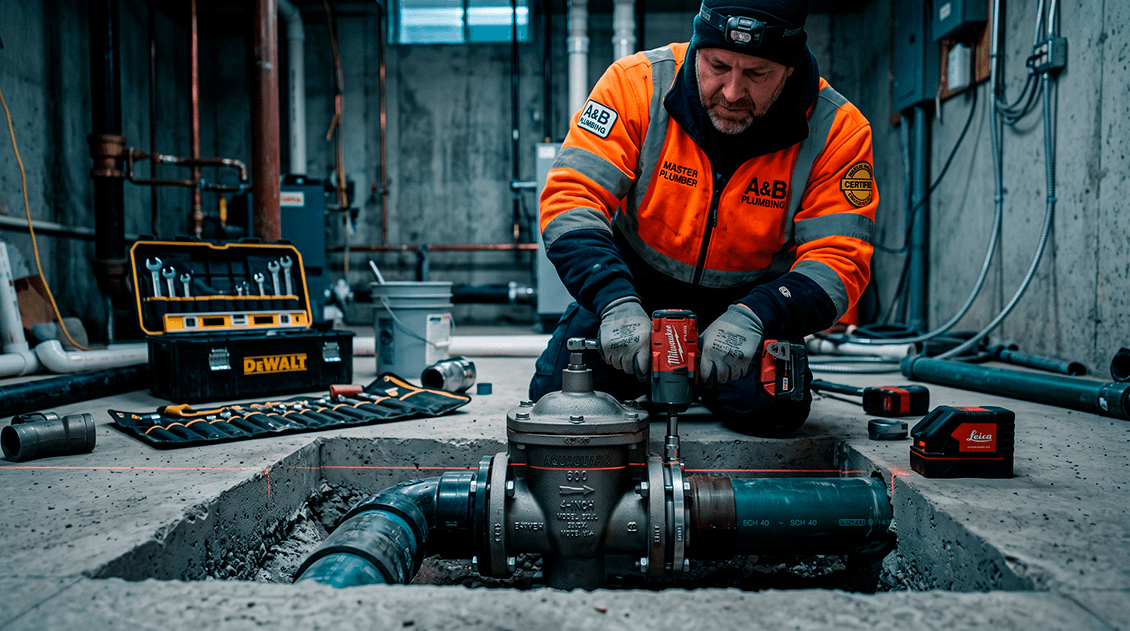
Professional slab excavation and precision plumbing retrofit executed to Michigan code standards.
Compliance with Michigan Plumbing Codes
The state of Michigan mandates strict structural integrity and flow efficiency standards for all backwater mitigation assemblies. Our network of independent contractors operates under an exhaustive compliance framework, ensuring that every valve retrofit fulfills all local permit requirements and passes rigorous post-installation inspections. Using non-rated or amateur-installed hardware not only jeopardizes the structure during backflow events but also introduces significant legal liabilities regarding municipal sewer connection codes. Every installation performed by our referral partners includes detailed technical documentation for municipal and insurance auditors, providing the necessary assurance of compliance that high-intent property owners require for total asset protection.
Modern engineering now incorporates enhanced valve technologies, including electronic remote-monitoring sensors. These systems provide real-time alerts to the homeowner via wireless network connectivity if the valve’s structural integrity or flapper state is compromised. This evolution in mitigation technology represents the next generation of basement defense, turning a passive mechanical component into an active, intelligent structural sentinel. By investing in professional-grade installation and maintaining a structured maintenance log, homeowners effectively immunize their physical property against the most unpredictable variables of municipal sewer system failure, preserving both equity and residential health for years to come. In conclusion, the systematic retrofitting of backwater protection remains a foundational element of modern property stewardship in regions impacted by legacy municipal infrastructure limitations.